Recognition over recall
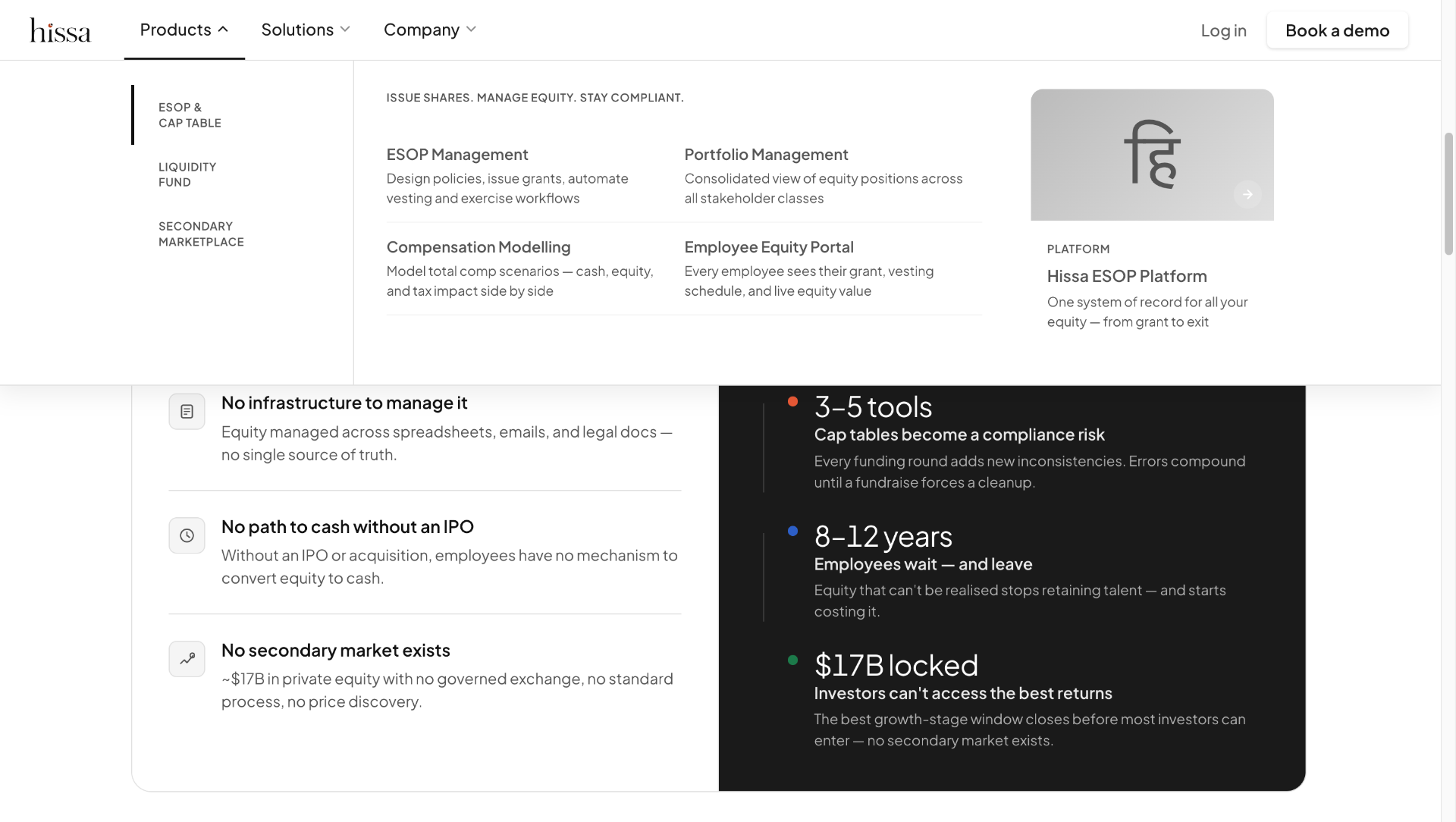
Nielsen's heuristic, applied to navigation. Group entries by user intent, not by internal team. Four labels the reader can recognise will always beat sixteen labels they have to remember.
A redesign that treated the homepage as the product's first conversation — moving from feature lists to a structured, readable content system built around comprehension.
Hissa sits at the intersection of two ideas most readers don't arrive understanding — private-market ownership and the liquidity infrastructure that moves it. The old website asked every visitor to assemble that understanding on their own, from feature pages that talked about modules instead of meaning.
The information architecture had grown one stakeholder request at a time. Sixteen navigation entries, four overlapping product pages, and a homepage that introduced the company three different ways before the fold. There was no order, no priority, no clear answer to what is this and who is it for.
The deeper problem was trust. Private markets are unfamiliar territory for most readers — and a page that can't position itself clearly reads, to a serious buyer, as a company that can't either.
Concepts that needed to land — ownership, liquidity, cap-table infrastructure — were buried under marketing copy that explained features instead of the world the features lived in. A founder evaluating us could not tell, in thirty seconds, whether we were a cap-table tool, a liquidity platform, an ESOP product, or all three.
The brief, written down, was “refresh the design”. The actual problem was structural: the site did not have a point of view about what mattered, in what order, to whom. No amount of new typography would fix that.
I reframed the project as an information architecture, trust, and positioning problem — with visual design as the consequence, not the lead.
“We weren't redesigning a marketing site. We were designing the first interface a user ever touches — and treating comprehension as the success metric.”
Once the website is framed as an interface, the questions change. Not “what should the hero animation be”, but “what is the user trying to learn, and in what order does that learning happen”. Not “what colour is the CTA”, but “what would have to be true on this page for someone to earn the right to click it”.
Structure became the design surface. Visual polish came last, and on purpose.
Nielsen's heuristic, applied to navigation. Group entries by user intent, not by internal team. Four labels the reader can recognise will always beat sixteen labels they have to remember.
If everything is bold, nothing is. The page needs a single most-important sentence, and every other element has to defend its weight against it. Hierarchy is a ranking exercise before it is a typography exercise.
Cap table, ESOP, and valuation in one system of record — built for the people who run it, not the people who buy it.
A reader can hold roughly four ideas in working memory at once. Sections were rebuilt to never present more than that — and to chunk denser material behind progressive disclosure.
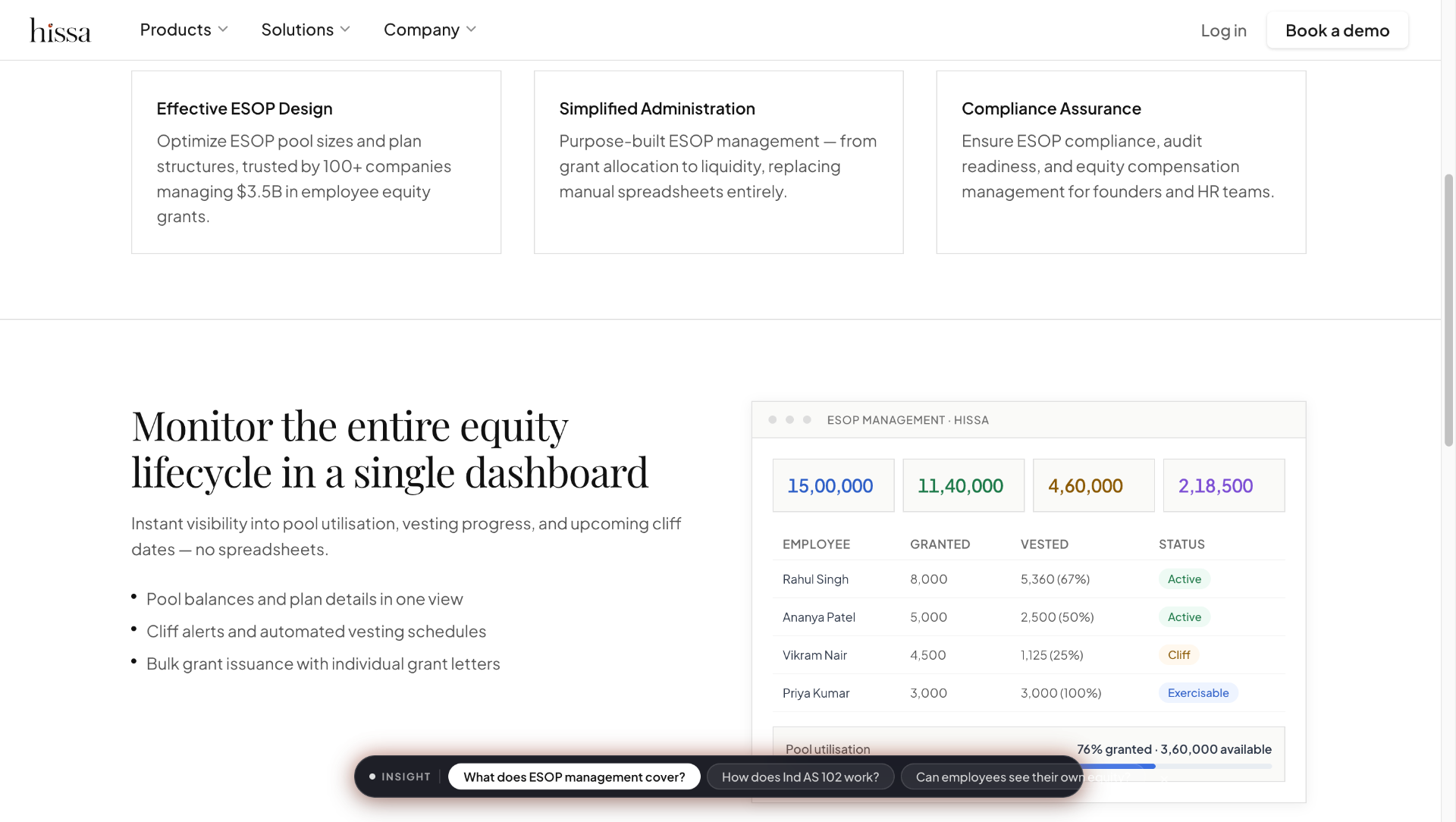
Dense paragraphs hide structure. We broke content into named, repeatable blocks — Statement, Definition, Pair, List, Quote, Spec — so the page reads like an outline, not an essay.
We ran twelve unmoderated tasks across three audience segments, asking each person to explain in their own words what the product did after sixty seconds on the homepage. Two people got it right. The rest produced a mix of three different explanations — all of them present on the page, none of them prioritised.
The old IA was a record of internal politics, not user intent. We rebuilt it from the user's questions — what is it, how does it work, who is it for, what does it cost — and then mapped existing content onto that frame. About forty percent of the old pages did not survive the mapping.
Treating the homepage as a conversation forced an order. First, what the product is — in one sentence, no jargon. Then how it works, in three steps. Then who it's for. Then proof. Then price. The structure mirrors how the founders explained the product on a call, because that explanation already worked.
Most readers only need the first layer. Some need two. Very few need four. We designed the page as a stack of layers, each one optional, so a CFO scanning for thirty seconds and an engineer reading for thirty minutes were both well-served — without either getting in the other's way.
Search engines and language models are now the second-largest reader of any B2B site. We treated semantic structure as a design constraint — a single H1 per page, scannable H2 outlines, plain-language definitions, and structured data — so the same hierarchy that helped humans also helped the systems that summarise the page on their behalf.
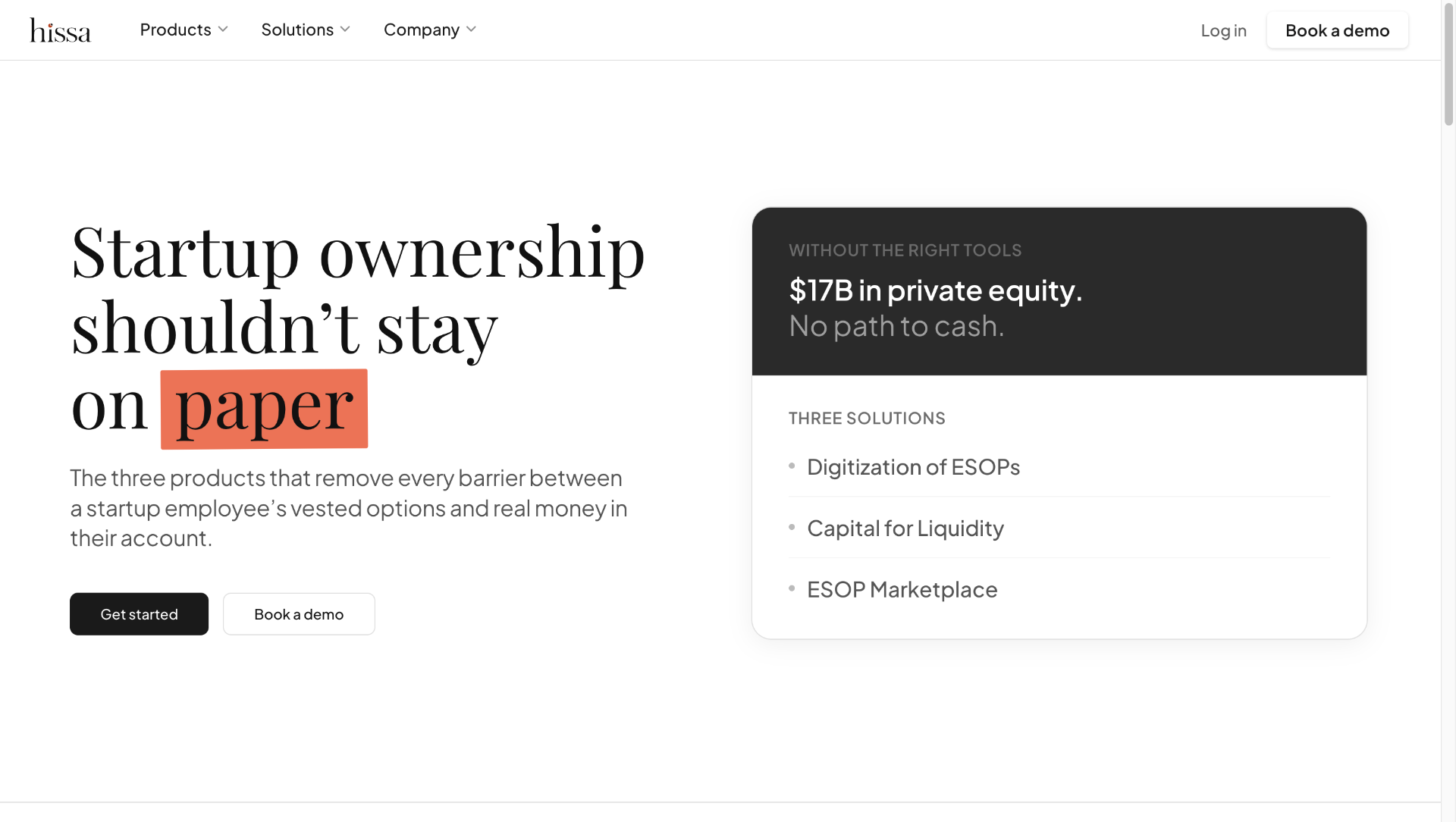
Three moments from the production site — the new hero, the restructured product navigation, and a product page that now earns its detail. Type system, content blocks, and disclosure rules all carry through.


Websites are product interfaces. The decisions that govern a good product — what to surface, what to hide, what order to ask questions in — are the same decisions that govern a good page. Treating a site as marketing is what produces decoration. Treating it as an interface is what produces clarity.
Clarity creates trust. Long before a buyer evaluates the product, they evaluate the company through the page — and a page that respects their attention reads as a company that will respect their time.
Structure matters more than visuals. A beautifully designed page on a confused information architecture is a more expensive way to be misunderstood. The redesigns that hold up over time are the ones that fix the outline first, and let the visuals follow from there.